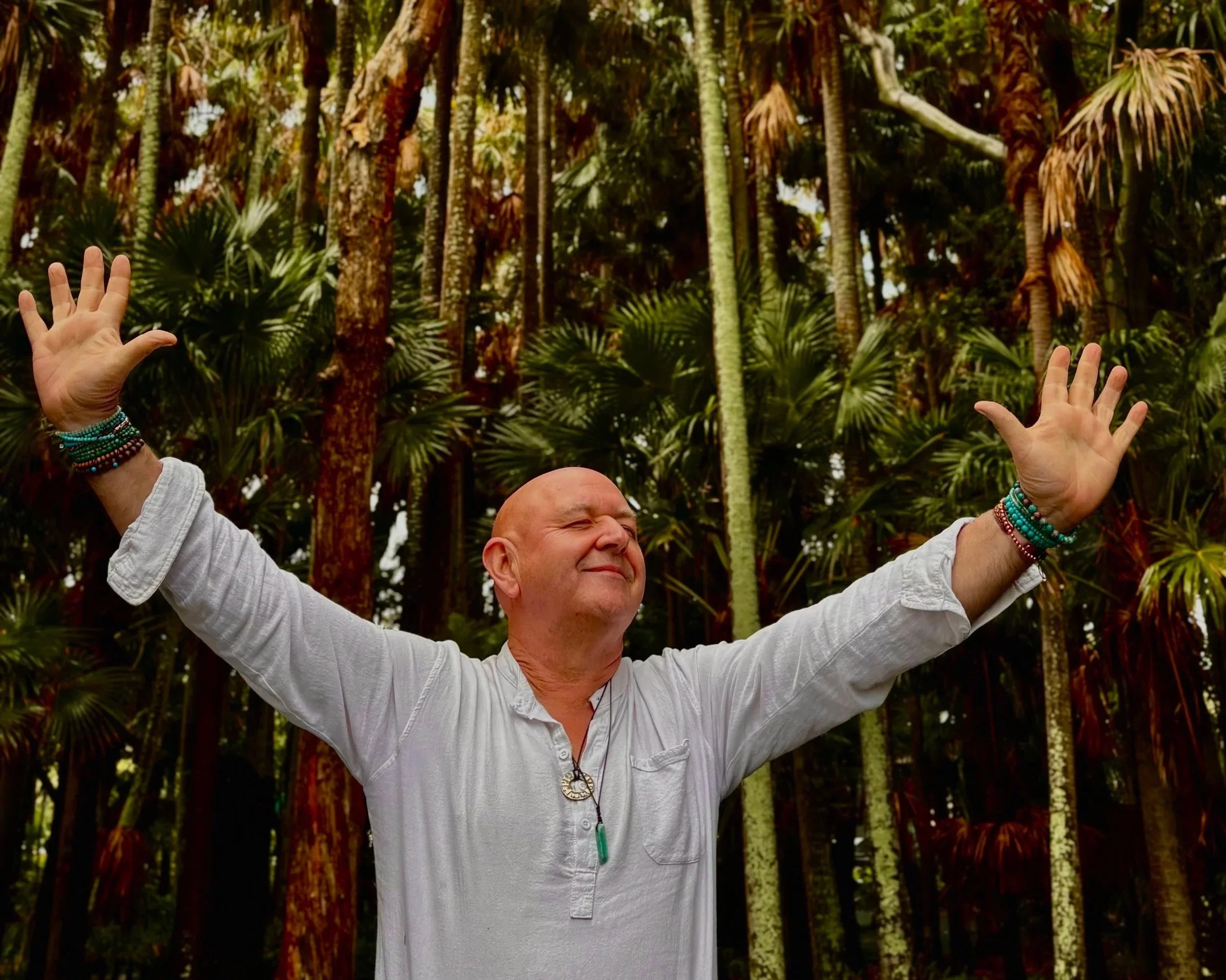
understanding shamanism
Modern Shamanism
Modern shamanism, as I live and teach it, isn’t a costume, a drumbeat, or a weekend identity. It’s a way of being in relationship with life as it actually is, it’s certainly not about pretending. It’s ancient wisdom stripped of theatrics, cultural belief systems and translated for real application in the current age. The old shamans weren’t trying to escape the world; they were trying to understand it well enough to move through it with clarity, responsibility, and heart. Modern shamanism does the same thing, just without the smoke machines and costumes. It asks better questions like: How does energy move in your thoughts? How do patterns repeat in your relationships? Where are you leaking power without noticing?
At its core, modern shamanism is about awareness and accountability. You learn how the unseen shapes the seen, how attention feeds outcomes, how stories become realities, how the nervous system, memory, and meaning are woven together. This isn’t belief-based work. It’s experiential. You don’t adopt ideas; you test them in your own life. When something shifts, it’s not because you hoped harder, but because you saw more clearly, because you focussed on an outcome. The sacred principles aren’t commandments; they are maps. And maps only matter if you’re actually walking the path.
Most importantly, modern shamanism returns authority to where it belongs: back to the individual. No gurus on pedestals. No borrowed language or masks to hide behind. Just the quiet, powerful remembering of who you are beneath the noise. A shamanic life doesn’t promise comfort, it promises truth. And truth, when met honestly, has a way of dissolving confusion, restoring direction, and reconnecting people to their own inner compass. Not to make you special. To make you present and authentic.

The Five Sacred Lores as taught by Koga
The First Lore: All Things Are Energy
Everything that exists is energy in motion. Thought, emotion, matter, memory, and intention are not separate, they are different expressions of the same underlying force. This lore restores energetic literacy, reminding us that nothing is motionless and nothing is meaningless.
The Second Lore: All Is One
There is no true separation between self, other, nature, or spirit. This lore dismantles the illusion of isolation and hierarchy. Harm done outward ripples inward. Healing done inward ripples outward. Unity is not a concept here, it is a lived reality.
The Third Lore: All Is Eternal
Life does not begin or end; it changes form. This lore speaks to continuity beyond the limiting concept of time. Birth, death, loss, and transformation are movements within an ongoing stream of being. Nothing real is ever lost.
The Fourth Lore: All Is Conscious
Awareness is not exclusive to humans alone. Consciousness permeates existence land, water, plants, ancestors, and the unseen all carry intelligence. This lore calls for humility, listening, and relationship rather than domination or projection.
The Fifth Lore: All Is Responding
The universe is not passive, it responds. Life answers attention, belief, intention, and action. What you consistently think, feel, and embody shapes what meets you. This lore restores responsibility without blame and power, without ego.

The Nine Sacred Principles as taught by Koga
A framework for living, not believing
The Nine Sacred Principles are not affirmations, rules, or spiritual ideals. They are observations about how reality behaves, tested through experience rather than faith.
They don’t ask you to believe them.
They invite you to notice them.
The First Principle: The World Is As You Think It Is
This principle points to perception.
Reality does not manifest as a blank canvas and then get interpreted later.
Your internal state, beliefs, expectations, assumptions, shapes how you experience the world in the now.
This is not about “positive thinking.” It’s about recognising that perception is participatory.
Change how you see, and the world you encounter changes with you.
The Second Principle: There Are No Limits
Limits are learned agreements, not universal laws.
This principle does not deny physical reality, it challenges inherited limitation.
What you believe is possible determines what you attempt, tolerate, or dismiss before you even begin.
Freedom begins when assumed limits are questioned rather than obeyed.
The Third Principle: Energy Flows Where Attention Goes
What you give attention to is what you feed.
What you consistently focus on, fear, lack, possibility, resentment, grows stronger in your experience. Not because of magic, but because attention shapes behaviour, emotion, and choice.
Where you place attention, you place life force.
The Fourth Principle: Now Is the Moment of Power
Real power does not exist in the memory of the past or in the speculation of the future.
Real power exists only in the present.
Regret lives in the past.
Anxiety lives in the future.
Power lives now.
This principle grounds you from distraction and into presence, where the power to choose is actually available.
The Fifth Principle: Love Is the Ultimate Power
Love here is not sentiment or romance.
It is coherence.
It is connection without domination.
It is the force that restores balance rather than fragments it.
When action is grounded in love rather than fear, it carries resilience instead of fragility.
The Sixth Principle: All Power Comes From Within
External authority can guide, but it cannot replace inner responsibility.
This principle dismantles dependency on gurus, systems, and saviour figures. It returns power and responsibility to the individual.
When power is outsourced, personal power collapses.
When power is reclaimed, life is reclaimed.
The Seventh Principle: Effectiveness Is the Measure of Truth
Truth is not what sounds good.
It is what works. Truth is what is.
If a belief, practice, or teaching does not improve clarity, wellbeing, or integrity in lived reality, it is incomplete, no matter how poetic it sounds.
Results reveal reality and reality reveals truth.
The Eighth Principle: All Is Sacred
Nothing exists outside relationship.
This principle removes the false divide between all things. Life is not something you step out of to become spiritual.
Presence makes things sacred, not inferior.
The Ninth Principle: We Are Here to Be of Service
Service is not self-neglect. It is contribution without superiority or to the detriment of self.
This principle places meaning not in ascension, but in participation. Not in being above life, but in showing up responsibly within it.
Service is the natural expression of love. One must first show love to oneself first. Without self respect, without self care, can you truly be of service? No.
In Summary
The Nine Sacred Principles are not beliefs or commandments to adopt. They are truths to test.
They don’t promise escape.
They offer grounding and direction.
When lived, not merely recited, they form a stable framework for grounded energetic authority, ethical power, and meaningful engagement with life and all that is.
Koga | Your Shamanic Teacher
Koga is a teacher of shamanism shaped by more than 35 years of lived experience, disciplined study, and direct initiation. A former pastor turned initiated shaman, his path bridges structured spirituality and ancient earth-based wisdom without falling into dogma or fantasy. This uncommon journey gives Koga a rare vantage point: he understands belief systems from the inside out, and he knows where they serve human awakening and where they limit it. His work is grounded, practical, and founded in real-world application, offering shamanism not as an escape from modern life, but as a way to meet it with clarity, resilience, and integrity.
Known among his peers as a pioneer in modern shamanism, Koga teaches without fluff, theatrics, or spiritual jargon. He strips shamanism back to its living core: energy, awareness, relationship with the natural world, the energetic world, and personal responsibility. Rather than being distracted by cultural layers or borrowed theatrics, he focuses on the actual mechanics of shamanic practice, how energy moves, how consciousness responds, and how humans can live in alignment with natural law in today’s world. His teaching is direct, embodied, and accessible, designed for people who want truth over performance and depth over spectacle.
Through one-on-one mentoring and group teachings at Koga’s Lounge, Koga invites seekers into a grounded understanding of shamanism as a living, evolving practice, one that belongs in the modern world, not locked in the past. For those drawn to shamanism but disillusioned by surface-level spirituality and theatrics, Koga’s work offers something rare: clarity, substance, and a return to what actually matters.
Shamanism FAQ’s
-
Shamanism is an ancient, nature -based way of understanding reality that focuses on relationship, awareness, and direct experience rather than belief systems.
-
No. Shamanism is a practice and a way of engaging with life, not a religion, doctrine, or belief structure. Koga describes shamanism as a pathway, something you live - not something you believe.
-
A shaman works with awareness, energy, and pattern recognition to help people restore harmony, clarity, and personal authority.
-
No. Shamanism works through experience, presence, and attention, belief is optional.
-
Both. It’s spiritual (as the modern world understands spirituality) in its depth, practical in its application, and grounded in everyday life.
-
Shamanic practices predate organised religion and are tens of thousands of years old.
-
When practised respectfully and without costume or fantasy, shamanism is a universal human inheritance, not a performance.
-
Greater clarity, personal empowerment, emotional regulation, grounded connection, self-trust, and a stronger sense of meaning.
-
Yes. By teaching presence, grounding, and nervous system awareness, shamanic practices can reduce anxiety.
-
When practised responsibly and grounded in reality, shamanism is safe and stabilising.
-
Modern shamanism translates ancient wisdom into real-world application without ritual excess or superstition.
-
No. All that you need to practice shamanism is trained and practiced, not gifted.
-
Healing is a by-product of the shamanic path. The core focus is understanding and harmony.
-
Yes. Shamanic work helps people safely reconnect with their body, presence, and inner authority.
-
In many cases yes.. It complements therapy and psychological care. Many people who have been in therapy for years have terminated their therapists after working with Koga.
-
Energy refers to the frequencies of nature and the cosmos. It also refers to attention, awareness, and how experiences move through the body and mind.
-
Shamanism predates science but aligns with modern understandings of neurobiology, attention, and embodiment. Shamanism, like science is based in the observation and study of the elements and the natural world.
-
Yes. You don’t need belief, only curiosity and honesty.
-
Shamanism at its core is about understanding that the state you are in is ultimately controlled by the individual. Artificial induced states are NOT at the centre of shamanism, rather they are cultural ideas. This is not a popular idea among traditional shamanic practitioners.
-
Grounding means being fully present in your body and in reality, not escaping it. In shamanism, grounding is very much about connection.
-
Shamanism helps you remember what matters by stripping away borrowed expectations and beliefs.
-
Yes. It restores rhythm, boundaries, and personal energy levels.
-
No. It simply doesn’t require belief structures nor is it subject to them.
-
Yes. It’s essential for daily life, not as ceremonies but as practice..
-
Yes. It’s essential for daily life, not as ceremonies but as practice..
-
In shamanism, nature is a teacher, mirror, grounding force, and conduit to greater insights and connection.
-
Rituals may exist, but they are tools, not the focus. Rituals are very much dependent on the individual.
-
Yes. It sharpens intuition and reduces mental noise.
-
A symbolic and inaccurate way of describing reclaiming lost parts of attention and identity after stress or trauma. The truth is you cannot lose aspects of your soul.
-
Yes. shamanism is a practical pathway for real survival and empowerment.
-
Yes. It improves self-awareness, boundaries, and communication.
-
Sometimes historically, but it is not required. This is usually a personal interest decision.
-
Visions can occur, but insight is encouraged as a priority.
-
Yes. It provides grounded ways to process loss without bypassing pain. In shamanism there are no endings, only cycles.
-
Only when mixed with fantasy, ego, or ungrounded teachers.
-
A focused inner awareness practice similar to guided imagination or meditation.
-
Yes, personal responsibility and inner authority, not control over others. The fifth Sacred Principle Of Shamanism reminds us that love is the ultimate power. The Sixth Sacred Principle tells us that all power comes from within.
-
Illness is often seen as imbalance, stress, or disconnection, not moral failure. the shamanic view is that everything is a teacher.
-
Yes. It builds trust in lived experience rather than external validation.
-
Managing where attention goes and what you carry emotionally. Ultimately it’s about taking responsibility for the energy you nurtute in your life.
-
It can appear mystical, but it is fundamentally practical.
-
A period of intense learning and responsibility, the shaman teacher traditionally determines initiation readiness. This is becoming less popular in modern shamanism.
-
A period of intense learning and responsibility, the shaman teacher traditionally determines initiation readiness. This is becoming less popular in modern shamanism.
-
No. But everyone can live shamanically.
-
Living with awareness, connection, responsibility, and respect for energy and life.
-
Living with awareness, connection, responsibility, and respect for energy and life.
-
Yes. It clears internal blocks and restores flow.
-
It honours ancestral wisdom without worshipping the past.
-
Yes. It was built for high-pressure survival environments. Most modern stress is a direct result of living in contrast to the shamanic path.
-
Shamanism is experiential and practical, not belief-based.
-
Shamanism is experiential and practical, not belief-based.
-
No. It is about engaging reality with greater awareness and influence.
-
Yes, when taught simply as presence, connection to nature and awareness.
-
Death is seen as a transition, not an end.
-
Historically it has been, but modern practice does not require them.
-
Yes. Understanding fear reduces its power.
-
The ability to respond consciously rather than react unconsciously.
-
Neither. It is balanced.
-
Sometimes, but these are tools for focus, not requirements. Again these practices are mostly grounded in culture and are ultimately personal choices.
-
For the most part yes,, but it starts as awareness.
-
Yes. Strong boundaries are essential in shamanic work.
-
No. Results come from understanding, not performance.
-
One-on-one guidance focused on clarity, responsibility, and growth.
-
Yes. It sharpens intuition, resilience, and focus.
-
No. It includes truth, shadow, and responsibility.
-
Yes. By restoring self-acceptance and presence.
-
Yes. Many concepts overlap with modern psychology.
-
Ego is a tool, not an enemy.
-
No. It removes the need to be special.
-
Yes. It cuts through noise and dogma.
-
To help people live awake, empowered, grounded, and responsible lives.
-
Yes, through presence rather than avoidance.
-
No. It’s about being in relationship with it.
-
No. It’s for human beings.
-
Yes. It addresses root causes, not just symptoms.
-
Experiential wisdom, lived and applied.
-
Not as some might think. Healing self is the power of shamansm. What we heal in ourselves, we heal in other.
-
Not at all. Labels disappear quickly in real shamanism.
-
Yes. Grounding is essential to shamanism.
-
Yes. It sharpens inner clarity and sparks inner passion..
-
More than ever.
-
Anyone ready to live awake, honest, connected and present.